The supplement industry looks deceptively simple from the outside: source an ingredient, put it in a capsule or gummy, sell it online, repeat. In reality, it is one of the most competitive, trust-dependent, and heavily regulated categories in e-commerce, a space where household names with decades of shelf presence and enormous marketing budgets typically dominate the conversation.
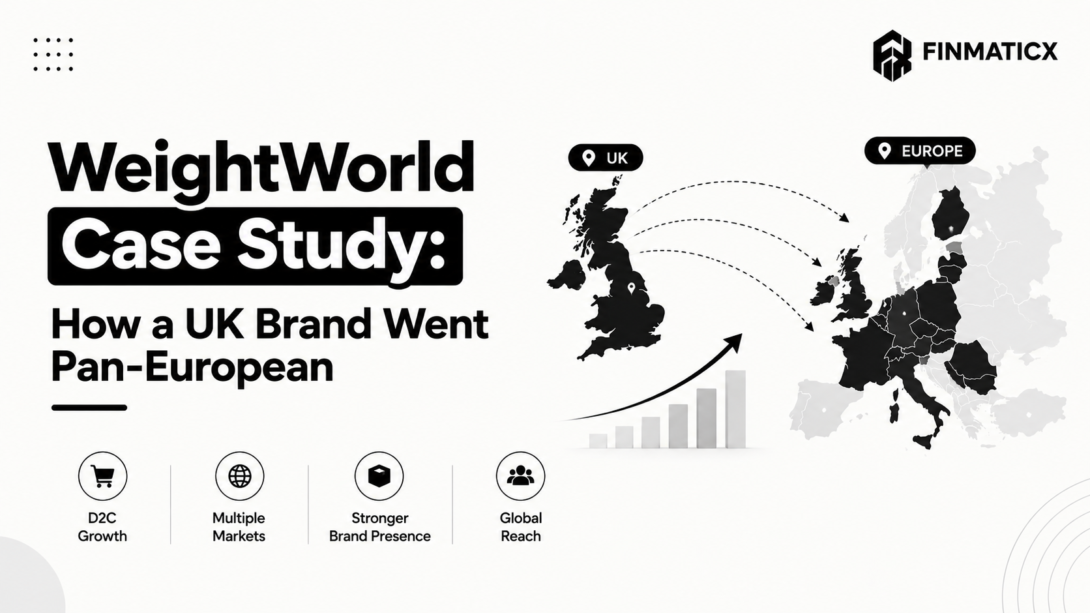
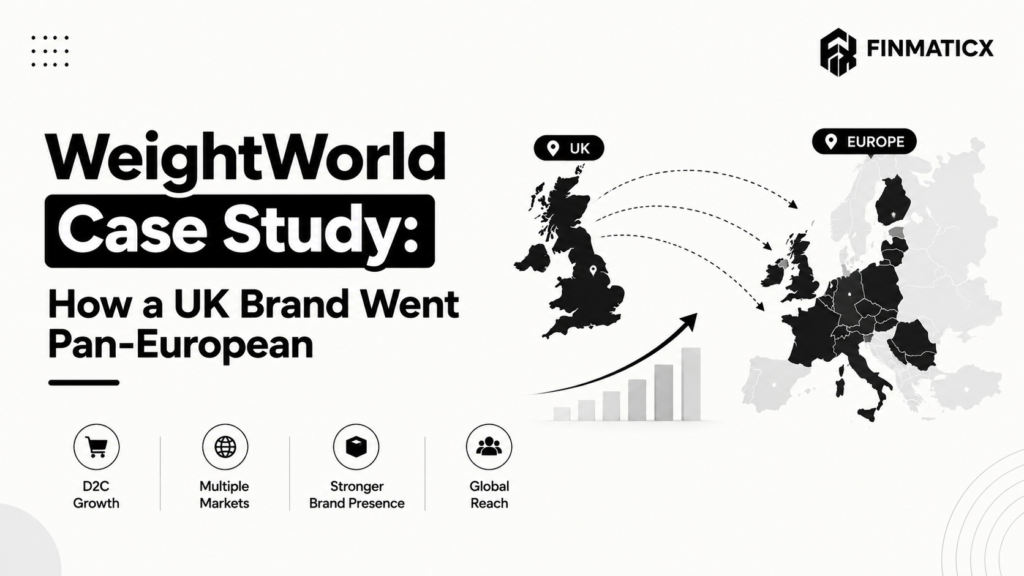
Weightworld built a genuinely successful business inside that exact environment. What started as a small, family-run UK supplement retailer has grown, over nearly two decades, into a direct-to-consumer brand operating its own dedicated storefronts across the UK, France, Germany, the Netherlands, and Spain, with a brand narrative of serving “100 million people worldwide.”
This case study takes a long, detailed look at how Weightworld’s business model actually works, drawing directly on the company’s own published brand messaging and its public, high-volume customer review record across five country markets. It covers the brand’s history, its country-by-country international growth approach, its full product portfolio, its most well-known products, how it generates revenue, how it wins and keeps customers, and how it operates inside UK and EU supplement regulation.
What Is Weightworld?
Weightworld is a UK-founded health and wellness brand that sells natural, GMP-certified supplements directly to consumers through its own branded online storefronts. Although the brand’s name points to its weight-management roots, its current catalogue spans a much wider set of wellness categories, including sleep support, digestive health, joint and mobility support, immune health, and general fitness, reflecting a deliberate evolution from a single-category retailer into a broader wellness brand over the course of its operating history.
Because Weightworld sells primarily through its own branded storefronts rather than depending on third-party pharmacy chains or general marketplaces as its main channel, it maintains direct control over pricing, product presentation, customer communication, and the repeat-purchase marketing that keeps customers coming back for their next order.
Company History and Founding
Weightworld was established in the mid-2000s in the United Kingdom as a small, family-run supplement business, according to the company’s own published brand history. It began with a focused catalogue of natural weight-management products, the category that still gives the brand its name today, before gradually broadening its offering into a much wider range of wellness products across the two decades that followed.
This growth pattern, starting narrow in one well-defined, trusted category before expanding into adjacent product lines, is a strategy shared by many of the most durable direct-to-consumer wellness brands, since it allows a company to build genuine credibility and a loyal repeat-customer base in one area before asking that same audience to trust it in new categories.
Headquarters and Corporate Structure
Weightworld’s UK operations are based at the Sevenoaks Enterprise Centre in Kent, England, the address listed on its UK-facing storefront. Its French-facing storefront lists a separate registered address at Saint Martin Bellevue, and its Dutch-facing storefront lists a registered address in Amsterdam. This structure, a UK home base paired with dedicated registered presences for its major European markets, allows the brand to tailor its operations, customer service, and compliance approach to each country it serves rather than running every market through a single undifferentiated head office.
Weightworld’s Business Model in Detail
At its core, Weightworld runs a direct-to-consumer e-commerce model built around several connected pillars, each of which plays a distinct role in how the brand operates day to day.
Owned storefronts as the primary channel. Weightworld sells primarily through its own branded websites, giving it more control over margin, presentation, and customer relationships than a brand that depends mainly on wholesale or third-party retail distribution.
Localized country storefronts. Rather than running a single international website translated into multiple languages, Weightworld operates fully separate domains and storefronts for its major markets, including weightworld.uk, weightworld.fr, weightworld.de, weightworld.nl, and weightworld.es, each carrying its own localized language, pricing, and dedicated customer service and review presence.
Consumable, repeat-purchase products. Supplements are, by their nature, products that get reordered on a recurring cycle rather than purchased once, which supports a naturally recurring revenue pattern even without a formal subscription product structure.
Loyalty and rewards programs. Weightworld runs a points-based reward scheme aimed specifically at frequent customers, a mechanic explicitly designed to reward repeat purchases and deepen the relationship with its most engaged buyers over time.
International Expansion: A Country-by-Country Approach
Rather than launching one generic pan-European website, Weightworld built out dedicated, fully localized storefronts for each of its major markets. Each country site, spanning the UK, France, Germany, the Netherlands, and Spain among others, carries its own language, currency, registered business presence, and an independently large Trustpilot review profile, with review volumes ranging from several thousand to well over nine thousand reviews per individual country storefront.
This country-by-country approach requires considerably more operational investment than a single generic international site would, since it means maintaining separate customer service teams, separate marketing language, and separate logistics relationships for each market. The scale of the review activity across each of these individual storefronts suggests the investment has translated into a large, active customer base in every major market the brand serves.
Product Portfolio Deep Dive
Weightworld’s catalogue spans several distinct wellness categories, reflecting its evolution from a single-focus weight-management retailer into a full-spectrum wellness brand:
- Weight management — including glucomannan-based fiber capsules, a Konjac-root-derived fiber formulated to support appetite management, along with metabolism-support blends
- Sleep support — melatonin-based and herbal sleep formulas
- Digestive and gut health — probiotic supplements and fiber-based digestive aids
- Joint and mobility support — glucosamine-based supplements
- Immune support — vitamin and mineral blends formulated for daily immune health
- Fitness and performance — amino acids, creatine, and energy-support products
- Gummy-format supplements — a growing category for the brand, reflecting the broader industry shift toward more palatable, easier-to-take supplement formats
- Wellness devices — including an electric foot massager, showing the brand’s catalogue extends beyond ingestible supplements into adjacent wellness hardware
This breadth of categories is a deliberate catalogue strategy rather than incidental sprawl. A brand built around a single seasonal category, such as weight management, which sees predictable demand spikes around January and early summer, faces sharp seasonal demand cycles. A broader wellness catalogue smooths revenue across the calendar year and increases the average customer’s lifetime value by giving them recurring reasons to reorder from the same trusted brand across multiple different wellness needs.
Weightworld’s Famous Products
Based on customer reviews and product mentions across Weightworld’s storefronts, several products stand out as the brand’s most recognized and frequently purchased items:
- Glucomannan Complex — a 3000mg Konjac-root fiber capsule formulated with added choline, chromium, and vitamins B3 and D3, designed to promote a feeling of fullness and support normal metabolism, one of the brand’s signature weight-management products
- 4-in-1 Magnesium Complex — a blend combining multiple highly absorbed forms of magnesium in a single formula
- Berberine capsules — a popular metabolic-support supplement frequently mentioned among repeat customers
- Glutathione supplements — an antioxidant-focused product often purchased alongside the brand’s other wellness lines
- Irish Sea Moss — a mineral-rich marine supplement that has become a popular addition to wellness routines
- Milk Thistle — a traditional liver-support herbal supplement
- Ashwagandha — an adaptogenic herbal supplement, widely searched for and purchased across the brand’s European storefronts
- Curcuma (Turmeric) Gummies — part of Weightworld’s growing gummy-format range
- Apple Cider Vinegar Gummies — one of the brand’s most frequently mentioned gummy products among reviewers
- Multivitamin Gummies — a daily wellness staple across the gummy range
- Glucosamine Gummies — a gummy-format take on the brand’s joint-support category
- Electric Foot Massager — the brand’s wellness device offering, extending its catalogue beyond ingestible supplements
How Weightworld Makes Money
Weightworld’s revenue model rests on several connected mechanics that work together across its full catalogue and country footprint.
The foundation is direct product sales through its own e-commerce storefronts, priced with the higher margins typical of a direct-to-consumer brand that sells primarily through its own channels rather than through wholesale or third-party retail distribution. On top of that foundation sits repeat purchase behavior, since supplements are consumable products that customers reorder on a recurring basis rather than buying once, which naturally builds a recurring revenue pattern over time as a customer base grows and matures.
Weightworld also benefits from cross-category upselling, where a customer who initially purchases a weight-management product is later marketed the brand’s sleep, digestion, joint-care, or fitness lines, increasing the total value of each customer relationship well beyond a single product category. This is reinforced by multi-market sales volume, since the brand extends its core product catalogue across five or more localized European storefronts rather than depending on demand from a single country. Finally, loyalty-driven retention through the points-based rewards program increases the likelihood that a customer’s second, third, and fourth purchase happens with Weightworld rather than a competing brand, compounding the value of each individual customer relationship over their full purchasing lifetime with the brand.
Customer Acquisition and Retention Strategy
Weightworld’s growth strategy blends several acquisition and retention levers that work together across its marketing, pricing, and loyalty systems.
On the content and education side, the brand invests in explaining ingredients and use cases clearly on its product pages, helping customers understand what a product does and why, before they purchase, a meaningful trust factor in a category where efficacy claims are often approached with skepticism by first-time buyers. This is paired with search-driven traffic strategies, since supplement buyers frequently research ingredients and product benefits before making a purchase decision.
On the conversion and retention side, Weightworld uses free delivery thresholds, such as free UK delivery on orders over £35, a classic average-order-value lever that nudges customers toward adding a second or third product to their basket rather than ordering a single item. This works alongside the brand’s points-based loyalty rewards program, explicitly designed to make repeat customers feel recognized and to increase how frequently they place new orders. Across all five of its major country storefronts, Weightworld also invests in active reputation management through review platforms, responding to Trustpilot reviews to maintain visible engagement with its customer base at scale.
Logistics and Delivery Strategy
Weightworld markets a wide logistics network offering next-day or two-to-three-day tracked express shipping across its served markets, with messaging around delivering to major European cities within 24 hours. Fast, reliable delivery is a meaningful competitive lever in the supplement category specifically, since customers who are reordering a consumable product on a recurring basis tend to care more about consistent, predictable turnaround time than a first-time buyer making a one-off discovery purchase would.
Brand Positioning: “Trusted by 100 Million People Worldwide”
Across its country storefronts, Weightworld consistently positions itself around a brand narrative of starting as “a small family business” that has grown into a brand “trusted by 100 million people worldwide.” This scale-driven positioning is a deliberate brand messaging choice that leans on social proof, a particularly effective lever in the supplement category, where health-related purchase decisions tend to carry a higher perceived risk than typical consumer goods purchases, making evidence of widespread trust and adoption an important part of the buying decision for new customers evaluating the brand for the first time.
Customer Trust Signals: What Trustpilot Reviews Show
Weightworld maintains large, active Trustpilot review profiles across each of its major markets, with review volumes ranging from close to five thousand in the Netherlands to over nine thousand in Spain, and over eight thousand each in the UK and France. Reading across these reviews reveals consistent, recurring praise for the brand’s fast dispatch and delivery speed, its product quality, particularly in its gummy-format range, its competitive pricing relative to perceived product quality, and the positive experience repeat customers describe with the brand’s points-based loyalty program, with several reviewers specifically highlighting how the rewards scheme makes them feel valued as long-term customers.
This kind of sustained, high-volume, largely positive review activity across five independently operated country storefronts is itself a meaningful data point about the brand’s customer experience at scale, since it reflects genuine engagement from thousands of individual customers across multiple languages and markets rather than a single, isolated audience.
Regulatory Environment: Operating Under UK and EU Supplement Law
Selling supplements across UK and EU markets means operating under strict labeling, safety, and health-claim regulations. Brands in this category must manufacture to Good Manufacturing Practice, or GMP, standards, and must keep marketing claims within what is legally permitted for food supplements, since, unlike medicines, supplements are not permitted to claim they treat, cure, or prevent disease under either UK or EU consumer protection frameworks.
For the full regulatory detail behind this framework, the UK’s Food Standards Agency guidance on food supplements and the European Commission’s food supplements guidance are the authoritative sources on what is legally required in each region. This regulatory backdrop shapes how brands like Weightworld communicate their products, typically leaning on language like “supports,” “aids,” or “contributes to normal function,” phrasing that appears consistently across the product descriptions on its storefronts and reflects careful alignment with the permitted health-claim framework in both jurisdictions.
Market Position
Weightworld operates in a wellness and supplement market that includes long-established, multinational household-name brands with decades of shelf presence in pharmacy chains and general retail. Within that landscape, Weightworld has built its position around a few clear differentiators: deep product range within specific wellness niches, a fully digital, direct-to-consumer distribution model that meets customers directly online, localized country-by-country experiences rather than a single undifferentiated global presence, and format innovation, particularly in gummies and wellness devices, that keeps its catalogue aligned with evolving consumer preferences.
Strengths of the Weightworld Model
Weightworld’s business model reflects several structural strengths that have supported its growth over nearly two decades. Its diversified, multi-category product catalogue reduces dependence on any single seasonal trend, smoothing demand across the calendar year in a category that would otherwise see sharp seasonal spikes. Its direct-to-consumer margin structure supports a level of marketing and customer-experience investment that a wholesale-dependent brand of similar size typically could not match. Its multi-market, fully localized reach across five or more European countries spreads demand across different national markets rather than concentrating risk in any single economy. And its long operating history, dating back to the mid-2000s, has allowed it to build the kind of cumulative brand trust that matters enormously in a product category where trust heavily influences every purchase decision.
Lessons for Other D2C Wellness Brands
Weightworld’s trajectory offers several transferable takeaways for founders building in adjacent categories.
Start narrow, expand deliberately. A single trusted product category can become the foundation for a much broader catalogue once genuine customer trust has been established, rather than trying to launch broad and build credibility everywhere at once.
Localize rather than globalize generically. Country-specific storefronts, language, and customer service tend to convert and retain customers more effectively than one undifferentiated international site, even though the operational investment required is considerably higher.
D2C economics reward retention over acquisition. In a consumable-product category, the real long-term margin comes from repeat purchases rather than the first sale, which is exactly why loyalty programs and free-delivery thresholds matter just as much as the initial marketing push that brings a new customer in the door.
Regulation is a constraint to design around from day one. Brands that build fully compliant marketing language into their product descriptions from the very beginning avoid the costly repositioning work that comes from having to retrofit compliance later.
Review platforms function as an ongoing trust engine. At the scale Weightworld operates, thousands of public reviews per country act as a continuously updated, highly visible trust signal for every new customer evaluating the brand for the first time.
If you’re researching or building a similar D2C brand strategy, the AI Prompt Generator can help you structure sharper research prompts, and Finmaticx GPT is a free, no-login tool for quick business research along the way. If your growth strategy includes paid campaigns, Finmaticx Ads GPT can help draft platform-specific ad copy, and the Free AI Business Name Generator is useful at the very first step of naming a new product line.
FAQ: Weightworld Business Case Study
What is Weightworld? Weightworld is a UK-founded health and wellness brand that sells natural, GMP-certified supplements directly to consumers online, covering categories like weight management, sleep, digestion, joint health, immune support, and fitness.
When was Weightworld founded? Weightworld was established in the mid-2000s in the United Kingdom as a small, family-run supplement retailer, according to the company’s own published brand history.
Where is Weightworld headquartered? Weightworld’s UK operations are based in Kent, England, with separate registered addresses supporting its French and Dutch storefronts, reflecting its multi-country operating structure.
How does Weightworld make money? Weightworld generates revenue through direct-to-consumer e-commerce sales, repeat purchases of consumable supplement products, cross-category upselling, and sales across multiple localized European storefronts.
What are Weightworld’s most famous products? Some of Weightworld’s most frequently mentioned and purchased products include its Glucomannan Complex, 4-in-1 Magnesium Complex, Berberine capsules, Glutathione supplements, Irish Sea Moss, Milk Thistle, Ashwagandha, Apple Cider Vinegar Gummies, Multivitamin Gummies, Glucosamine Gummies, and its electric foot massager.
What markets does Weightworld operate in? Weightworld operates dedicated storefronts for the UK, France, Germany, the Netherlands, and Spain, among other markets, each localized in language and currency.
How is Weightworld regulated? As a supplement brand operating in the UK and EU, Weightworld is subject to food supplement regulations covering manufacturing standards, labeling, and permitted health claims, overseen by bodies like the UK Food Standards Agency and equivalent EU authorities.
Does Weightworld sell through third-party marketplaces or only its own website? Weightworld’s primary sales channel is its own branded, country-specific e-commerce storefronts, which forms the core of its direct-to-consumer business model.
What do customers say about Weightworld? Across its large, active Trustpilot profiles in the UK, France, Germany, the Netherlands, and Spain, customers consistently highlight fast delivery, strong product quality, competitive pricing, and a positive experience with the brand’s points-based loyalty program.
Final Thoughts
Weightworld’s case study is a strong example of how a smaller, independently run brand can build a genuinely durable, multi-country position inside a category shaped by much larger competitors, not by outspending them, but by deepening its product range, localizing aggressively market by market, investing in loyalty mechanics that reward its most engaged customers, and building cumulative brand trust over nearly two decades of consistent operation. Its large-scale, active customer review record across five country markets reflects a brand that has translated that long operating history into a genuinely wide, engaged customer base.
For more breakdowns like this, browse the Finmaticx blog archive or explore the free AI tools directory to speed up your own business research. Learn more about what Finmaticx does on the About page.
Sources
- Trustpilot — Weightworld.uk reviews (review volume, UK customer sentiment, brand messaging, free delivery threshold)
- Trustpilot — Weightworld.fr reviews (French registered address, review volume, customer sentiment)
- Trustpilot — Weightworld.de reviews (German market presence, customer sentiment)
- Trustpilot — Weightworld.nl reviews (Dutch registered address, review volume, brand messaging)
- Trustpilot — Weightworld.es reviews (Spanish market review volume, customer sentiment)
- UK Food Standards Agency — Food supplements guidance (UK regulatory framework)
- European Commission — Food supplements labelling and nutrition guidance (EU regulatory framework)
- Grokipedia — Weightworld overview (founding year, product formulation details, GMP certification)
This article is an independent analysis based primarily on publicly available information and does not represent an official statement from Weightworld.